
How to Identify Antique Brass Candlesticks: A Beginner's Guide
A practical beginner’s guide to dating brass candlesticks using shape, seams, marks, patina and weight, plus the tell-tale signs of modern reproductions.
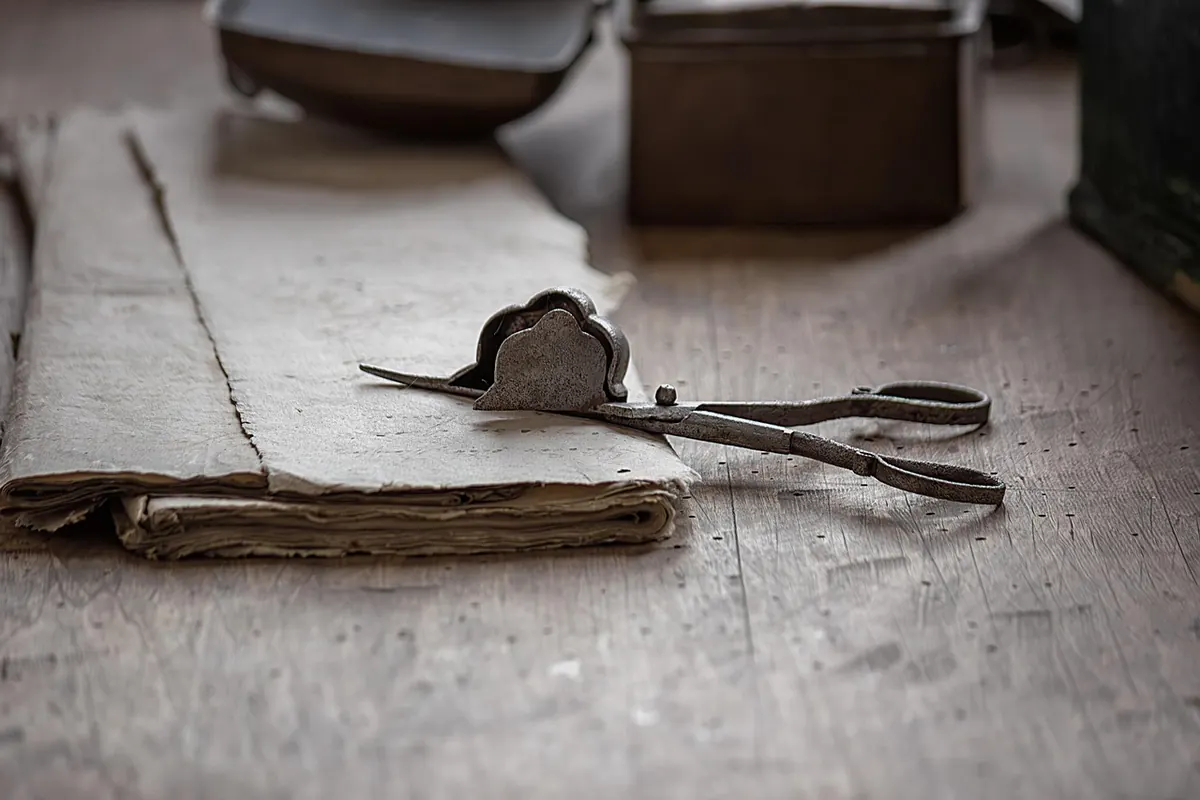
Brass candlesticks are the quiet workhorses of the antique trade. They stood on kitchen tables, hall stands and chapel altars for two centuries, which is why they still turn up in house clearances, charity shops and the backs of cupboards. Some are genuinely 250 years old. Many more were made in the 1970s and 1980s to look that way. The difference matters, both for what you pay and for what you own. Dating brass is not a laboratory exercise. It comes down to shape, construction, surface and weight, all of which you can assess in a few minutes with your eyes and hands.
Start With the Shape, Not the Marks
Fashions in candlesticks changed as steadily as fashions in chairs. As a rough rule, the earliest English and European sticks tend to be heavy and architectural: broad bases, thick stems, a certain squatness. Through the eighteenth century the proportions slim down, and you see baluster, column and faceted stems on square or octagonal bases with chamfered corners. By the nineteenth century, makers were chasing volume rather than weight, so lighter sticks with pressed decoration, beaded rims and wide flared bases become common.
Stems and bases
Look at how the base meets the stem. A clean, heavy casting that flows into the base in one piece suggests earlier work. A base that is clearly a separate disc, soldered on, is usually later and cheaper to produce. Square bases with cut corners appear across a long span, so treat them as a clue rather than a date.
Sockets and ejectors
The candle end is just as informative. A mid-drip pan set halfway down the stem is an early feature; later sticks move the pan up to the socket. Push-up ejectors, worked by a knob or lever to lift a spent candle stub, belong broadly to the eighteenth and nineteenth centuries and are usually found on hollow stems.
Be cautious all the same. Shapes were revived constantly. A stick in seventeenth-century style may be a Victorian copy or a 1980s reproduction, so shape narrows the field rather than settling the question.
Marks Are Rare, Seams Are Common
A word that saves a lot of disappointment: most brass candlesticks are unmarked. Brass was not subject to hallmarking in the way silver was, so nothing forced a maker’s stamp or a date letter onto the base. When you do find a mark, it is usually a foundry or retailer’s stamp, a pattern number, or a scratched pair number linking two sticks. Interesting, but seldom decisive.
Construction is far more talkative. Cast brass, common into the late eighteenth century, was made in two-part moulds and often carries a fine seam somewhere on the stem or base, sometimes filed smooth but rarely invisible. From the late eighteenth century onwards, much brassware was rolled from sheet and soldered, so look for a vertical seam inside the socket or down the stem. Nineteenth-century spun brass shows fine concentric rings, like the grooves of a record, and tends to be hollow and light.
Then examine the fastenings. Slotted screws suggest older work; Phillips and Pozidriv heads are twentieth-century. Soldered or brazed joints sit flat. A lumpy grey weld bead, or a modern machine screw with a bright, sharp thread, tells you the stick has been repaired, possibly recently. Repairs are not fatal, but they should affect what you are willing to pay.
Patina and Weight: Two Tests You Can Do on the Spot
The wear test
Real age leaves a particular surface. Old brass develops a soft brownish gold, darker in the recesses and around joints, with lighter, hand-worn highlights on the high points: the rim of the base, the shoulder of the stem, the outside of the socket where fingers grip. The key question is whether the wear makes sense. Wear should follow use, and use follows the hand.
A reproduction finish is usually too democratic. It is dark in every crevice and bright on every edge, as though it were sprayed on, because it was. If the underside is uniformly black and the top is uniformly polished, be suspicious.
Weight, sound and the magnet
Solid cast brass feels dense and cool, and gives a dull, low note when you tap it. Thin spun brass feels light and rings hollow and slightly tinny. Hold the stick in one hand and a known old one in the other if you can; your hands learn faster than your eyes.
Carry a small magnet. Brass is not magnetic. A magnet that clings firmly to the stem or base means steel or iron beneath a brass finish. Do not panic over a faint pull, because some old sticks have iron bases or iron-cored stems as a legitimate construction method. A hard clack, though, is plating.
Green verdigris is often read as proof of age. It really only means the metal has been damp, or that the alloy contains more copper. On its own, it proves nothing.
Telltale Signs of a Reproduction
Modern copies are not always cheap-looking, but they tend to share habits:
- A perfectly even, sprayed-on dark finish in every recess, with no wear on the high points.
- Machine-sharp edges and flawless symmetry; old castings and hand-finished pieces look slightly softened.
- Low weight for the size, often with a heavy disc hidden in the base to keep it upright.
- Felt, foam or plastic pads underneath. Older sticks had leather, or nothing at all.
- Phillips screws, bright modern threads, chrome-bright plating or visible welding.
- Sockets with thin walls and a narrow tube inside, too flimsy to have survived two centuries of candle smoke.
- A matched pair that is truly identical. Genuine old pairs often differ slightly, because they have lived separate lives.
- Stickers, laser etching, or a suspiciously crisp stamped mark on an otherwise battered-looking base.
A Five-Minute Inspection Routine
Next time you are holding a stick in a shop or at a fair, work through this in order. It takes less time to do than to read.
- Turn it upside down. The base is where the truth lives: casting texture, seams, solder, repairs, pads, screws.
- Look inside the socket. A vertical seam, spinning rings and solder lines all tell you how the stick was made.
- Weigh it in your hand and tap it gently. Dense and dull, or light and hollow?
- Run the magnet over the base and the stem.
- Read the wear. Are the highlights where hands would have been, and the dark where a cloth would not reach?
- Compare. If you own one old stick, use it as your reference. If not, handle as many as you can in dealers’ cabinets and museum displays.
Cleaning, and Knowing When to Stop
If you take one thing away, take this: do not polish an old candlestick until you know what it is. Abrasive polishes and liquid dips strip the surface that carries the evidence, and they can leave a pinkish stain on brasses with a higher copper content. Dust with a soft cloth. Wash grubby metal in warm water with a little mild soap, then
Photo: Black_Sea / Pixabay