

A Curio Hunter's Guide to Yorkshire Flea Markets and Boot Sales
Where to find Yorkshire's best car boot sales and flea markets, how to hunt them properly, and the small courtesies that keep sellers saving good things for you.
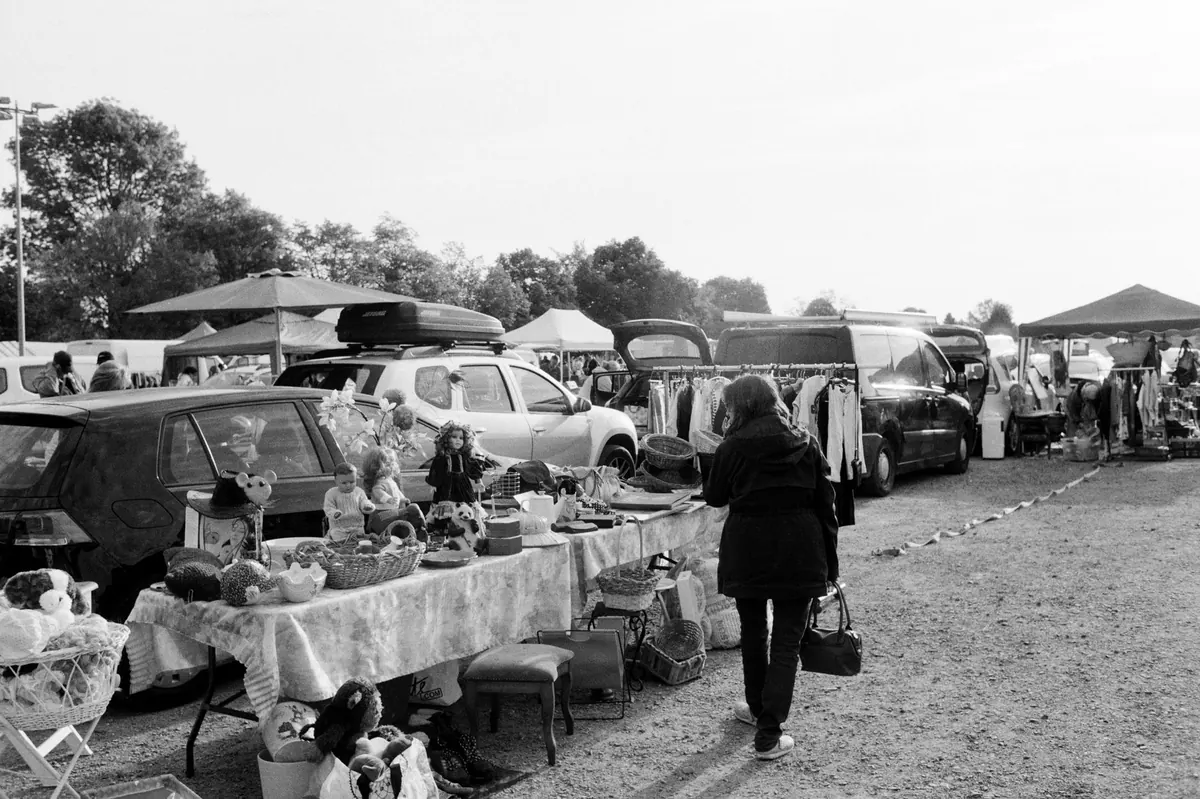
Yorkshire does not make a fuss about its clutter. It puts it out on a trestle table at ten past six in the morning, wraps the fragile pieces in yesterday's newspaper, and waits. By the time the rest of the county is awake, a box of 1950s postcards has gone to a collector from Hull and somebody is quietly haggling over a paraffin lamp with a dented fount.
That is the real pleasure of it — not the headline finds, but the ordinary Saturday when a dull box of tools turns out to have a brass folding rule at the bottom. What follows is a guide to where to go across the county, how to hunt well, and how to behave once you are standing at the table.
Boot Sales and Flea Markets Are Not the Same Thing
Car boot sales are seller-led. Households clear out a garage or a late relative's house, price things roughly and want them gone by lunchtime. That is where the genuine surprises turn up and where prices are softest. It is also where you will wade through a great deal of damp camping equipment to reach one good thing.
Flea markets, covered markets and antique centres are trader-led. The stock has already been picked over, the good pieces are priced to match, and the person behind the stall knows exactly what they have. You will not find a bargain in the same way, but you will find things that never reach a car park: better ceramics, early tools, and objects you cannot identify until you ask.
Do both. Boot sales teach you what things look like in the wild; markets teach you what they are worth.
Where Yorkshire Keeps Its Curiosities
Racecourses, airfields and showgrounds
The biggest sales run on racecourse and airfield sites, and the well-known ones around Wetherby, Ripon and Rufforth near York draw hundreds of cars and open early. Arrive for the gate, park facing the exit if you can, and work the far rows first while everyone else crowds the entrance. The first hour is the whole point — by nine o'clock the good boxes have been through three pairs of hands.
Market halls and covered markets
Leeds, Doncaster, Barnsley, Beverley, Skipton and Ripon all run market days, and most have at least a stall or two of secondhand oddments tucked between the fruit and the fabric. Indoor markets come into their own in February, when the outdoor sites are a mud bath. Walk the surrounding streets as well: charity shops near a busy market tend to be better stocked because of the footfall passing the door.
Village halls, church sales and auction rooms
The quiet ones are the best value. Village hall sales, church fundraisers and jumble sales in the Dales and the North York Moors are advertised on parish noticeboards, in local papers and on the doors of the buildings themselves. Competition is minimal and prices are gentler. Auction rooms in the smaller towns are worth visiting even if you never bid, because viewing days are free tuition in what things actually fetch.
What to Take
- Cash, in small notes and coin. Card readers are more common than they were, but plenty of sellers are cash only, and proffering a twenty for a fifty-pence item does not go down well.
- Bags and packing: two sturdy carriers, a roll of newspaper and a little bubble wrap. Sellers rarely have any.
- A torch, for the boxes under the table where the interesting things usually live.
- A small magnet, which will not stick to brass but will to plated steel — useful when a seller is insistent that something is solid.
- Gloves and hand wipes. You will be handling things that have been in a shed since 1974.
- A tape measure and a notebook, so you stop buying furniture that will not fit through the door and remember what you paid.
- Waterproofs and boots, whatever the forecast said. Plus a friend if you are buying anything heavy.
How to Hunt a Stall
Scan before you dive in. Let your eye travel across the whole table and stop on whatever does not belong: the shape, the colour, the single object that has age on it in a sea of plastic. That first sweep is worth more than an hour of digging.
Then get close and be thorough. Look under the table, behind the boxes and inside the lid of a case. Ask the question that unlocks more stalls than any other: have you got anything else in the van? Sellers often hold back the better pieces, either because they assume nobody wants them or because they never got round to unpacking.
Buy the box, not the item. If three of the forty things in a box appeal, offer for the lot — it usually works out cheaper per piece, and the rest can be passed on or given away.
Check condition honestly: chips, hairline cracks, crazing, replaced handles, repainted surfaces, missing keys. A printed mark is not a guarantee, since plenty of later pieces copy earlier ones. If you cannot identify something and the asking price is serious money, walk away. There will be another one.
Etiquette That Earns You First Look
Boot sale manners are simple, but they are noticed — and being remembered is how you end up seeing the good box before it hits the table.
- Do not rummage before a seller has opened up and set out. Stand back and wait.
- Ask before opening boxes, unwrapping parcels or taking anything apart.
- If an item is priced, one polite offer is fine. Chipping away at it is not.
- Never insult the goods. A seller who has just been told their mother's vase is rubbish will not deal with you.
- Put things back where you found them, roughly as you found them.
- Do not crowd a busy stall, reach across another buyer, or take something from someone's hands.
- Pay the asking price when it is fair. That is what gets you a nod next week and, eventually, the thing kept under the counter.
Ask before photographing a stall or a stallholder, too. Most will say yes; asking is what makes it pleasant.
Cleaning and Keeping
Resist the urge to restore. Most of what you bring home needs dusting, not scrubbing. Use the mildest thing that works: a soft brush, a dry cloth, warm water with a drop of washing-up liquid on glazed ceramics only. Do not soak wood, and do not polish brass to a mirror shine if it has a good old surface — original patina is part of both the charm and the value. Test old electricals cautiously, or have them checked before you plug them in. If something turns out to be genuinely valuable, take proper advice from a specialist before you touch it, and seek professional guidance on valuation, insurance and tax where money is involved. An enthusiastic clean can cost more than the item did.
Before You Set Off
Check local listings the night before and be realistic about the drive. Set a budget in the car park, take cash, go early, work the far rows first, and ask what is still in the van. Come home with something small and strange you did not expect. And if you come home with nothing at all, it has not been a wasted morning — you have learned what your patch holds, which is the whole
Photo: Alexis B / Pexels