Decorating with Oddities: 5 Ways to Avoid a Cluttered Look
A practical guide to displaying curiosities without the clutter, using negative space, restrained colour, grouping and regular rotation so each oddity holds its own.
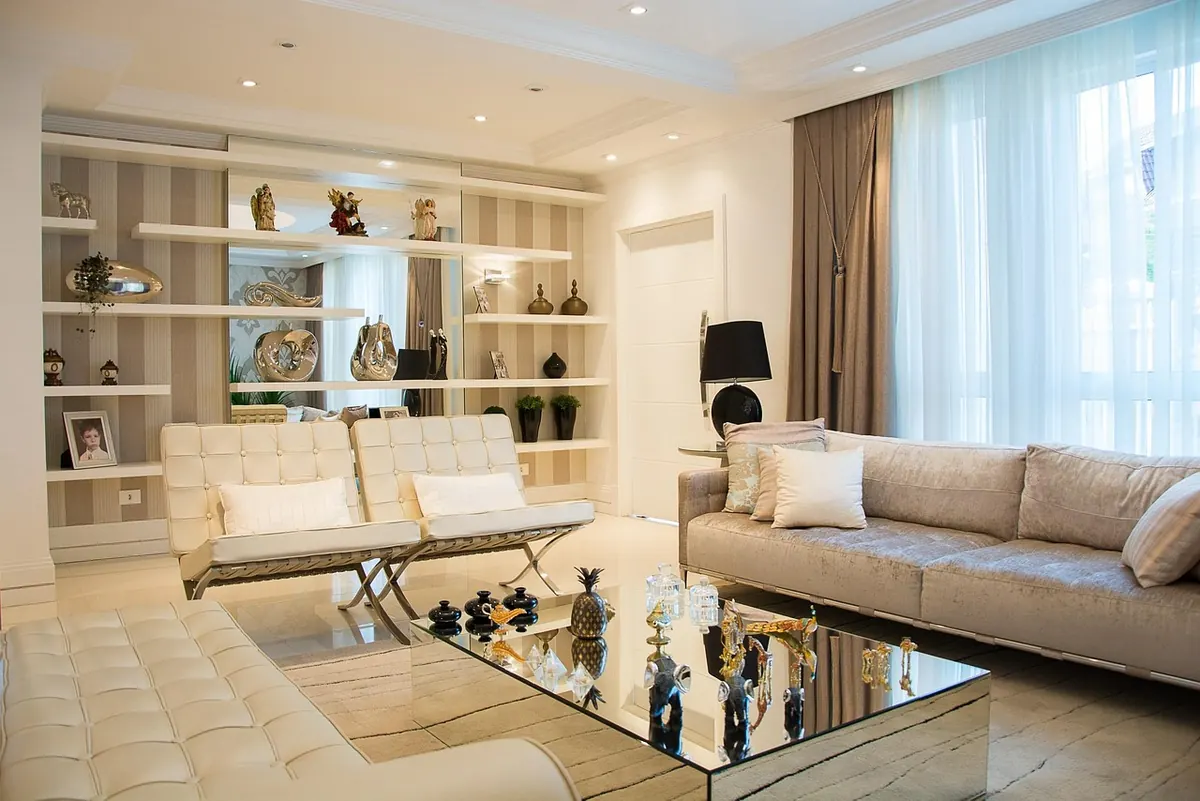
A single glass dome holding a hummingbird, set on a bare chest of drawers, will stop a visitor mid-sentence. The same dome squeezed between a jar of keys and a stack of paperbacks disappears. Oddities are rarely the problem; volume without order is.
Collecting is the easy part. Displaying is where most of us come unstuck. The mantelpiece fills, the shelves bow, and what began as a cabinet of curiosities starts to look like a car boot sale with better lighting. The answer isn't necessarily to buy less — though it rarely hurts — but to give each piece enough room to be strange and wonderful.
1. Give Every Surface Room to Breathe
Negative space is the most underrated tool in a collector's kit. A shelf is not a container to be filled; it is a frame, and frames need margins.
Try this: clear a shelf entirely and put back only your favourite object. Look at it for a minute. Now add a second piece that talks to the first. Stop. That is already a display. If a third earns its place, add it — but the moment two objects compete for the same scrap of attention, one of them needs to move.
A rough guide that suits most homes: leave around two-thirds of a shelf empty, and keep at least a hand's width between pieces that are meant to be read separately. Put the tape measure away for the small stuff and judge by eye instead. You are aiming for rhythm, not a spreadsheet.
The same principle applies on walls. Six framed prints hung tight together can look purposeful. The same six scattered across a whole wall look accidental. Keep the gaps either obviously deliberate or generously wide — nothing in between.
2. Work in Themes, Not Accumulations
The quickest way to make a collection read as a collection is to give it a thread. A theme can be as broad as you like, as long as you can say it in one sentence.
- Things that measure: a brass compass, a folding rule, apothecary scales, a barometer.
- Things that came out of the ground: ammonites, a lump of iron pyrites, sea glass, a worn clay pipe.
- Things from people you never met: a battered pocket watch, a christening spoon, a postcard written in 1911.
Three to five objects is usually plenty for one group. Once a theme is established, allow yourself one deliberate outsider — a single piece that shouldn't fit but somehow does. It reads as wit rather than mess, provided it is the only one.
Label the shelves, not the objects
A small handwritten card, a paper tag on linen thread, or a slip tucked beneath a piece can carry a lot of charm. Keep the wording plain: "found on Dunwich beach, 2019" beats a paragraph. And if something is genuinely valuable or of uncertain origin, don't write on it, stick anything to it, or label it in a way that cannot be undone.
3. Restrict Your Colour Palette
Clutter is often a colour problem in disguise. Forty objects in forty colours will look busy however carefully they are arranged. Narrow the palette and the same objects settle down.
A workable formula: choose a quiet base, one metal, and one accent, then let everything else support them. Bone and aged paper, brass and a single note of oxblood, for instance. Repeat those notes around the room rather than distributing every colour evenly. The eye likes repetition.
Backgrounds matter more than most people expect. Deep colours — olive, ink blue, a warm charcoal — flatter pale bone, glass and tarnished metal far better than white, which throws every object into hard silhouette. If repainting isn't an option, paint or line the back of a shelving unit. It takes an afternoon and changes everything in front of it.
4. Use Height and Depth on Purpose
Objects of similar size, lined up on a single plane, will always read as clutter. Vary the heights and the display starts to look composed.
Lift the smallest things onto blocks, plinths, upturned bowls or a short stack of hardbacks. Stand a tall piece at the back of a deep alcove and a low, wide piece in front. Hang a small vitrine at eye level, where a delicate object can actually be inspected, rather than burying it on a bottom shelf at ankle height.
Depth is the quiet advantage of a deep shelf or a wide windowsill. Layer three pieces front to back and the display gains a sense of discovery — you notice something new on the second look.
5. Edit, Rotate and Retire
Even a beautifully arranged shelf goes stale, and the surest cure is a regular swap. Twice a year is plenty: take down the things you have stopped noticing, box them carefully, and bring out pieces that have been resting.
Rotation has practical benefits too. Glass, feathers, textiles and anything organic suffer in strong light, so moving them periodically spreads the wear. Store the resting pieces somewhere dry and stable rather than in a loft that swings between damp and baking.
And be willing to retire things. A piece you keep only because you bought it is occupying space that something better deserves. Pass it on, sell it, or give it to someone who will actually look at it.
Putting It Together
If you are starting from a crowded room, work through it in this order:
- Clear every surface completely. Yes, all of it.
- Sort into four piles: display, store, repair, and pass on.
- Choose one anchor object per surface — the thing you would rescue first.
- Build a small group around it: three objects, one theme, one colour note.
- Step back and remove one thing. Then look again.
- Live with it for a week before adding anything else.
That last step is the one people skip, and it is the one that works. Oddities tend to be old, fragile or unusual, so keep them out of direct sunlight and away from radiators, dust them with a soft brush rather than a damp cloth, and make sure shelving is fixed to take the weight — a bracket rated for a row of paperbacks may not thank you for a lump of granite. If you are unsure whether something can legally be bought, sold or displayed, such as items made from protected species or archaeological material, check with a reputable dealer or the relevant authority before building a display around it. Old painted surfaces and some metalwork can carry lead, so wash your hands after handling and keep the curiosities out of reach of small children.
Photo: leemelina08 / Pixabay